How is Global Lab Different? (t)
Global Lab seeks to build a learning environment that provides an
authentic setting for real science. Such an environment would allow students to
share information, communication, and investigative tools, as well as social
and cultural conditions that stimulate and benefit the science learner.
Components include:
Authentic Investigative Questions
Authentic investigative questions
for which students feel a sense of engagement are critical. Whether they
themselves propose the question or received it from their peers or professional
scientists, students should be able to internalize the question as theirs.
Students gain an ability to pose questions through practical experiences and
through sharing these experiences in community discourse. Questions often arise
from discussions among small groups of people with similar interests.
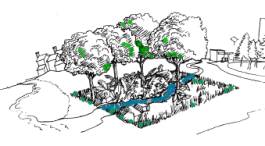
An Authentic Object of Study
The second is an authentic object
of study. An authentic object of study is connected to students' lives and to
life in their communities. For this reason, we ask students to select a part of
their local environment for their object of study.
Authentic Tools and Methodologies
The third component is authentic
tools and methodologies. Working with Global Lab tools, students gain
experience with scientific rigor. They come to understand the importance of
protocols and shared methodologies as they participate in collaborative
experiments.
Authentic Community
Last, but perhaps most important, is participation in an authentic community, a worldwide community of teachers and students connected through telecommunications. Through community participation, students acquire the communication and collaboration skills that will be so essential in the twenty-first century workplace.
A high school version of Global Lab was created by TERC of Cambridge, MA, and has been supported by the National Science Foundation of the USA. Now a new version lets younger students join the world-wide lab.